Shoeb & Jola

Make a trip of it

Explore Poland

The wedding falls on a Saturday, so if you can take the extra time, consider flying in a few days early and seeing more of the country first. A few favourites, in case you need convincing.

Poland's former royal capital

Kraków
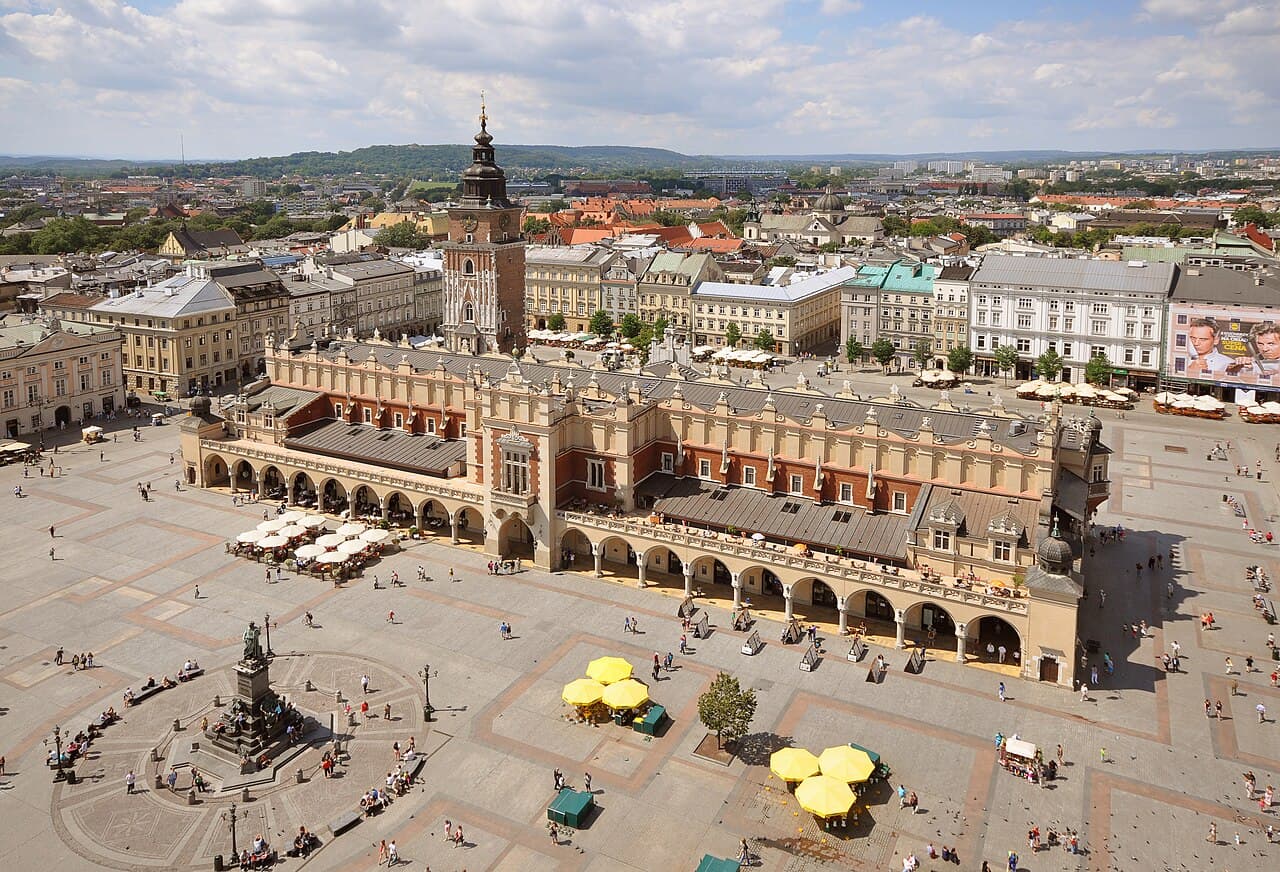
Aerial view of Kraków's Main Market Square and the Cloth Hall
Photo: Jorge Lascar, CC BY 2.0
Wawel Castle on the banks of the Vistula river in Kraków
Photo: Monika Towiańska, CC BY-SA 4.0

A little history

  • Kraków was Poland's capital for over 500 years, from the 11th century until the royal court moved to Warsaw in 1596 — Polish kings were still crowned and buried here for centuries afterwards.
  • The Main Market Square dates to 1257 and is one of the largest medieval town squares in Europe — remarkably, it's never been substantially altered.
  • Every hour, a trumpet call (the hejnał) plays from St Mary's Basilica's tower and stops abruptly mid-note — a tradition marking a 13th-century watchman shot mid-warning during a Mongol raid.
  • Kraków is one of the few major Polish cities that survived the Second World War almost entirely intact, which is why its Old Town still feels so medieval.

Worth seeing

  • The Main Market Square and the Cloth Hall (Sukiennice), still a working market after 700+ years
  • Wawel Castle and Cathedral, the seat of Polish kings for half a millennium
  • Kazimierz, the historic Jewish quarter, now full of bars and street food
  • Day trips: the Wieliczka Salt Mine, or the Auschwitz-Birkenau memorial
A capital rebuilt from ruins

Warsaw

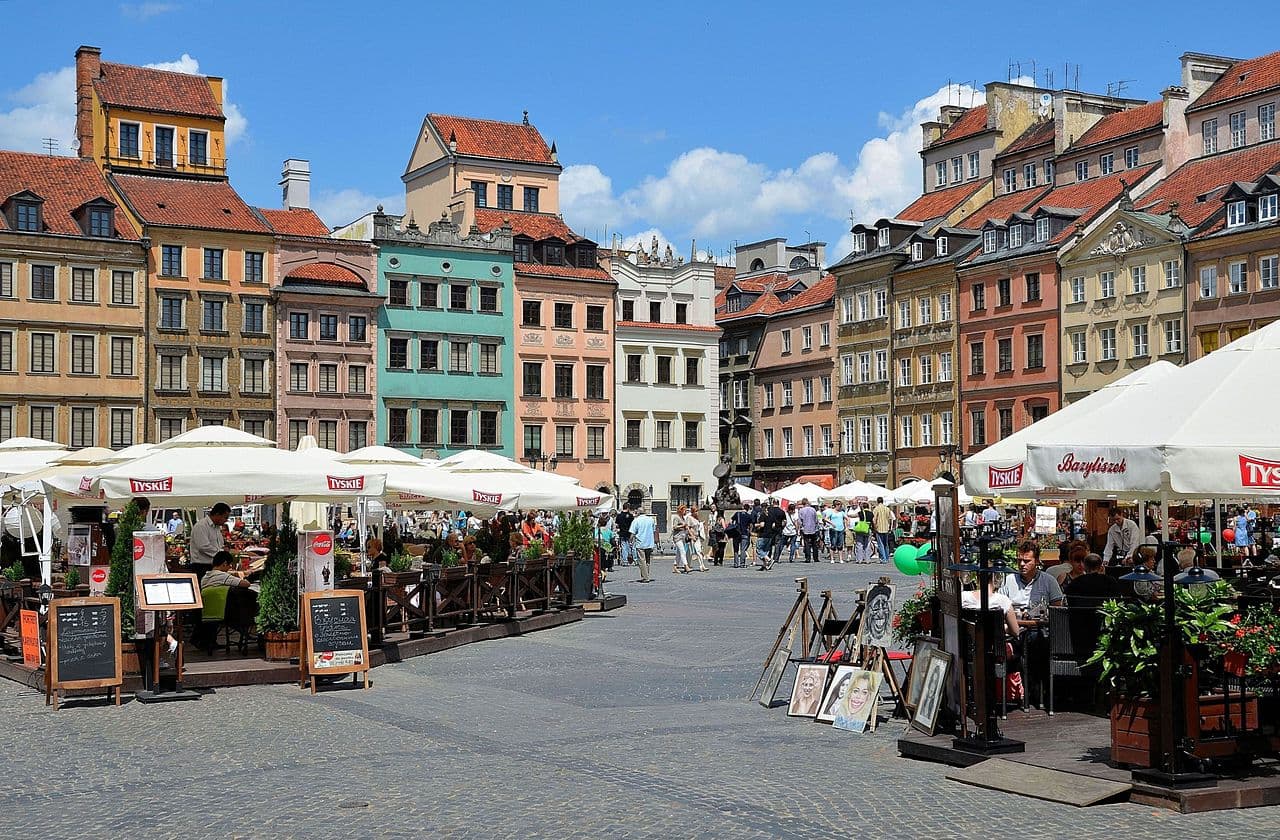
Colourful townhouses and outdoor cafes in Warsaw's Old Town Market Square
Photo: Adrian Grycuk, CC BY-SA 3.0 PL

A little history

  • By January 1945, an estimated 85% of Warsaw had been deliberately destroyed by occupying forces after the 1944 Warsaw Uprising — one of the most devastating losses of any European capital.
  • The Old Town was then rebuilt brick by brick from old paintings and photographs, so faithfully that UNESCO lists it as a World Heritage Site specifically for the reconstruction itself, not the age of the buildings.
  • Warsaw has been Poland's capital since 1596, when King Sigismund III Vasa moved the royal court here from Kraków.
  • The POLIN Museum stands on the site of the former Jewish ghetto and tells 1,000 years of Polish-Jewish history.

Worth seeing

  • The Old Town Market Place and the rebuilt Royal Castle
  • POLIN Museum of the History of Polish Jews
  • The Warsaw Uprising Museum
  • Łazienki Park, the former royal gardens, if you want a quieter afternoon

Gnomes, bridges, and a colourful market square

Wrocław

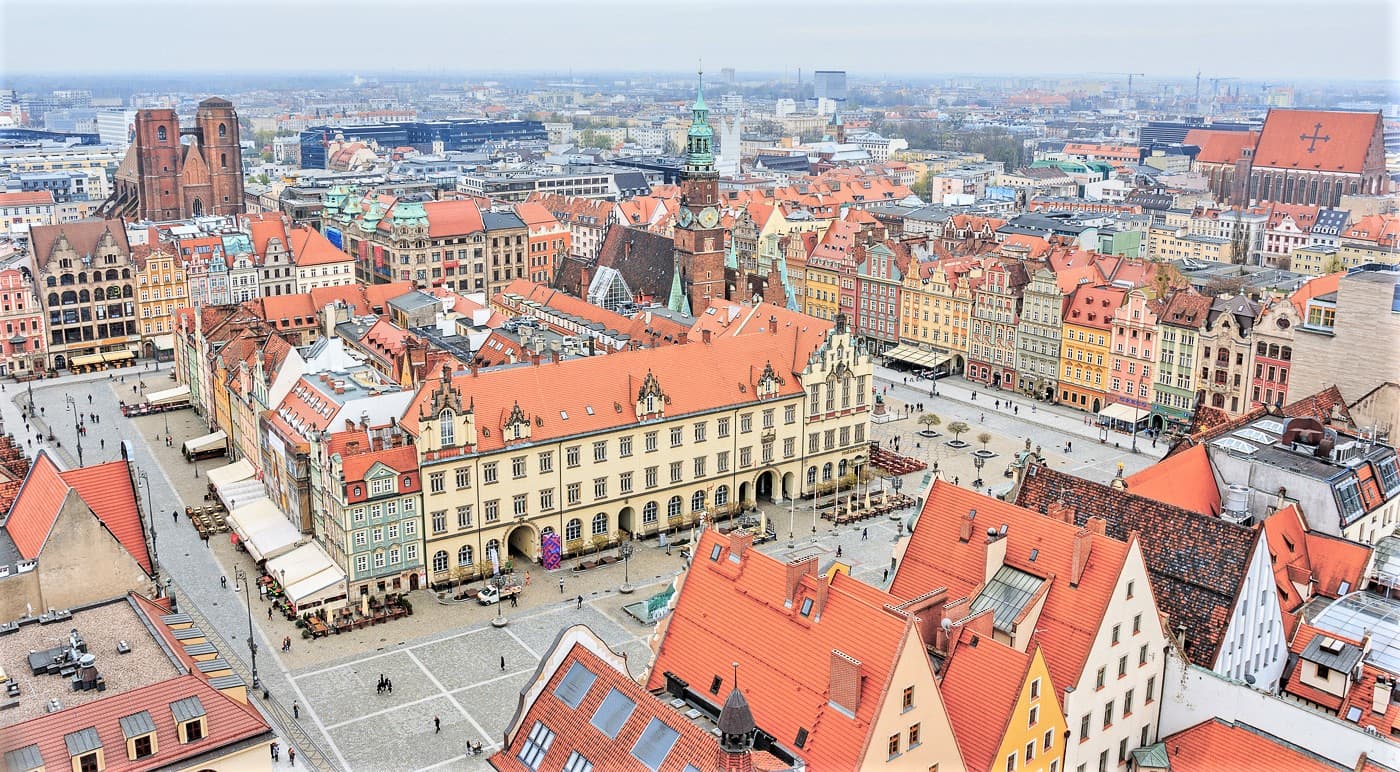
Aerial view of Wrocław's colourful Market Square
Photo: Hrs Poland, CC BY-SA 3.0

A little history

  • Wrocław spent much of its history as the German city of Breslau, changing hands between Bohemian, Habsburg, Prussian, and German rule before becoming part of Poland again after 1945's border changes.
  • That mixed history shows in the architecture — Gothic brick churches sit alongside Prussian civic buildings and Baroque university halls.
  • In the 1980s, an anti-communist protest movement called the Orange Alternative used small painted gnomes as a symbol of peaceful, absurdist resistance. Wrocław leaned into it — there are now over 600 tiny bronze gnome statues hidden around the city.
  • The Centennial Hall, built in 1913, was one of the first buildings to use reinforced concrete on this scale, and is a UNESCO World Heritage Site.

Worth seeing

  • The Market Square, one of the largest and most colourful in Europe
  • Ostrów Tumski (Cathedral Island), the oldest part of the city
  • A self-guided gnome hunt through the Old Town
  • The Centennial Hall and its surrounding gardens

Kraków, Warsaw, and Wrocław all have their own airports, so a common plan is: fly into one, spend a few days sightseeing, then hire a car and drive to the venue in time for the wedding. See the Location & travel page for the journey from each city.